TOTAL VAMPYRIC DEVOTION, Rwanda
Plum, Papaya, Dark Chocolate
| Producer | Various small holders |
| Mill | Mutova Washing Station |
| Region | Karambi, Nyamasheke District, Western Province |
| Varietal | Red Bourbon |
| Processing | Natural |
| Altitude | 1,950 MASL |
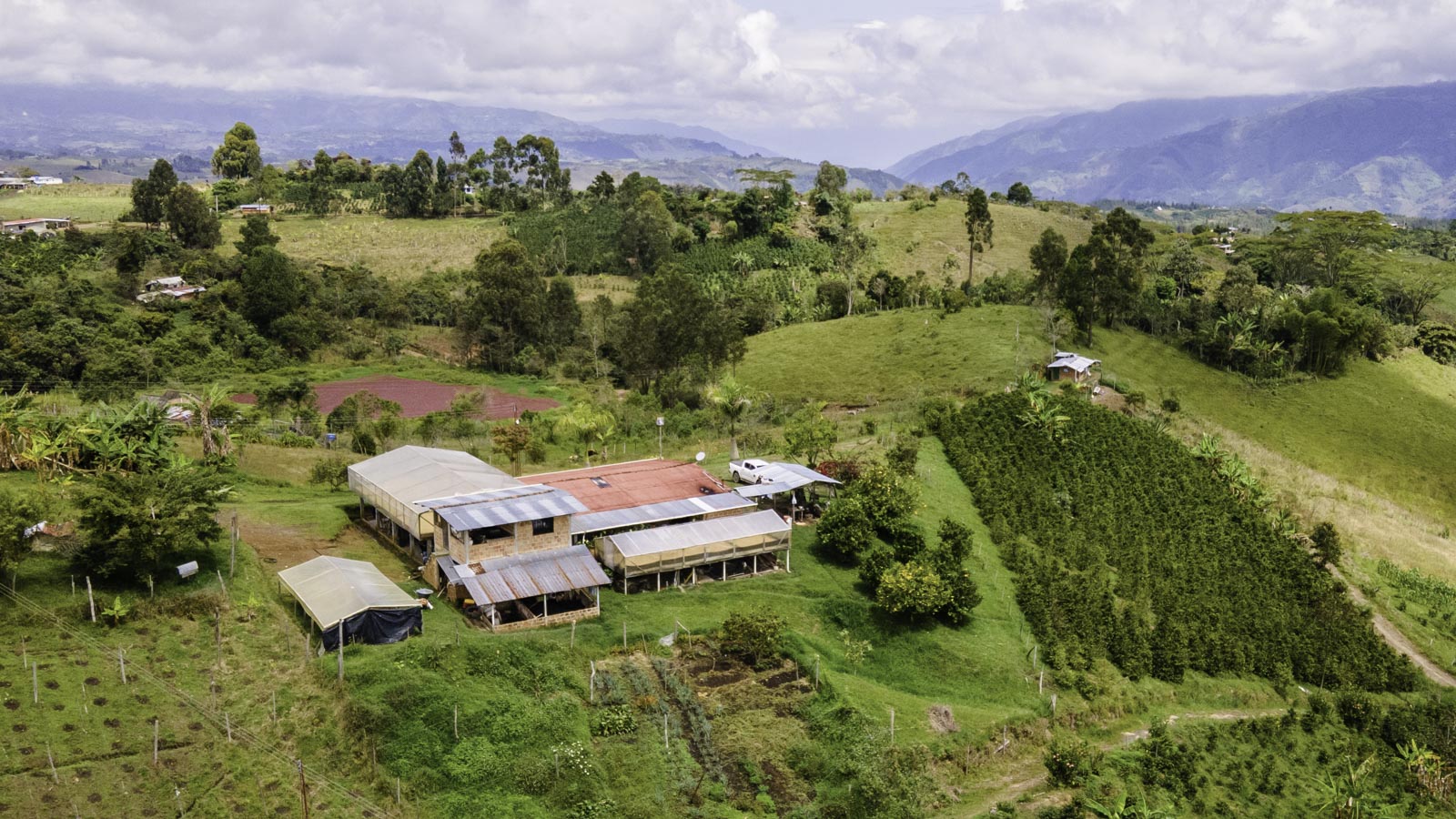
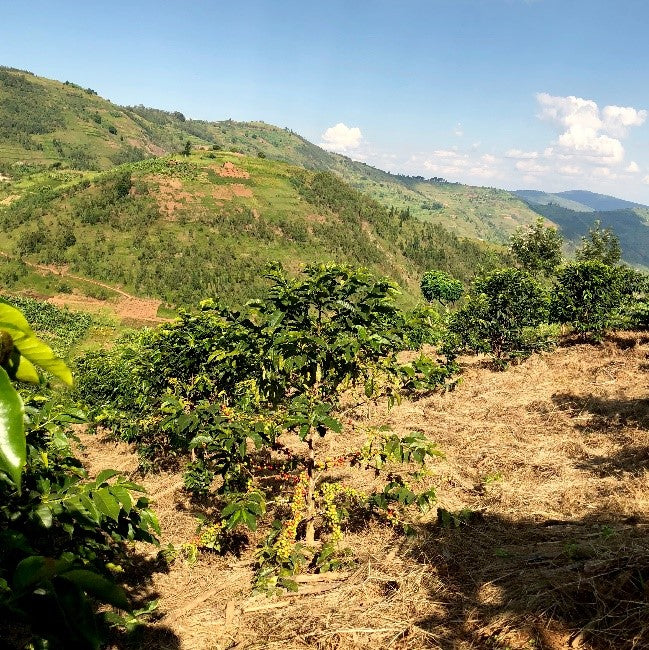
Karambi rises in the Nyamasheke district of Rwanda’s Western Province, where the ridges of the Karambi sector meet the boundary of Nyungwe Forest. Born in 2016, it remains the only station that RWACOF has raised from the ground itself. The terrain ascends from 1,700 to 2,000 metres above sea level, a height that sharpens the fruit and lends to the cup its depth and clarity.
The road from Kigali coils westward for hours before yielding to Karambi. At the crown of the hill stands the school of the same name, its grounds filled with children and restless voices. To pass here unseen is impossible. The energy flows downward into the station, where for four months of harvest the labour does not cease. At the height of the season one hundred and twenty hands work in unison, every stage guarded by watchful eyes.
Nyamasheke holds the greatest host of washing stations in Rwanda. Along the shores of Lake Kivu, the land bears volcanic soil, altitude, and rain as if appointed for this very fruit. From these conditions come coffees of uncommon strength. Karambi gathers from a wide circle of farmers, most of whom are women. The cherry enters through trial. First by water, where the lesser fruit is cast aside. Then by hand, where each imperfection is sought and removed. What remains is laid upon raised beds, thinned and turned each day beneath the open sky. For near three weeks the fruit is left to yield itself to the sun and the wind until the work is complete.
Not far from Karambi lies Mutova, set beside the river from which it takes its name. The station holds just two hectares yet stands as a lifeline for nearly one thousand farmers. Established in 2012 and later bound to RTC, Mutova is sustained by the river and the rains, the waters gathered and drawn across the site. Its strength is found not in scale but in devotion. 90% of its labourers are women, their hands guiding the harvest with care. Around three hundred tons of cherry pass through its gates each year, gathered from farms that rise close to the station, each one carrying thousands of trees upon its soil.
Together Karambi and Mutova bear witness to the covenant of land and labour. One raised as a cornerstone, the other as a river’s offering. Both move with a quiet fervour, bound to the same endurance, and through them the fruit is transformed into a cup that carries the weight of its origin.