
Suitable for all brewing methods.
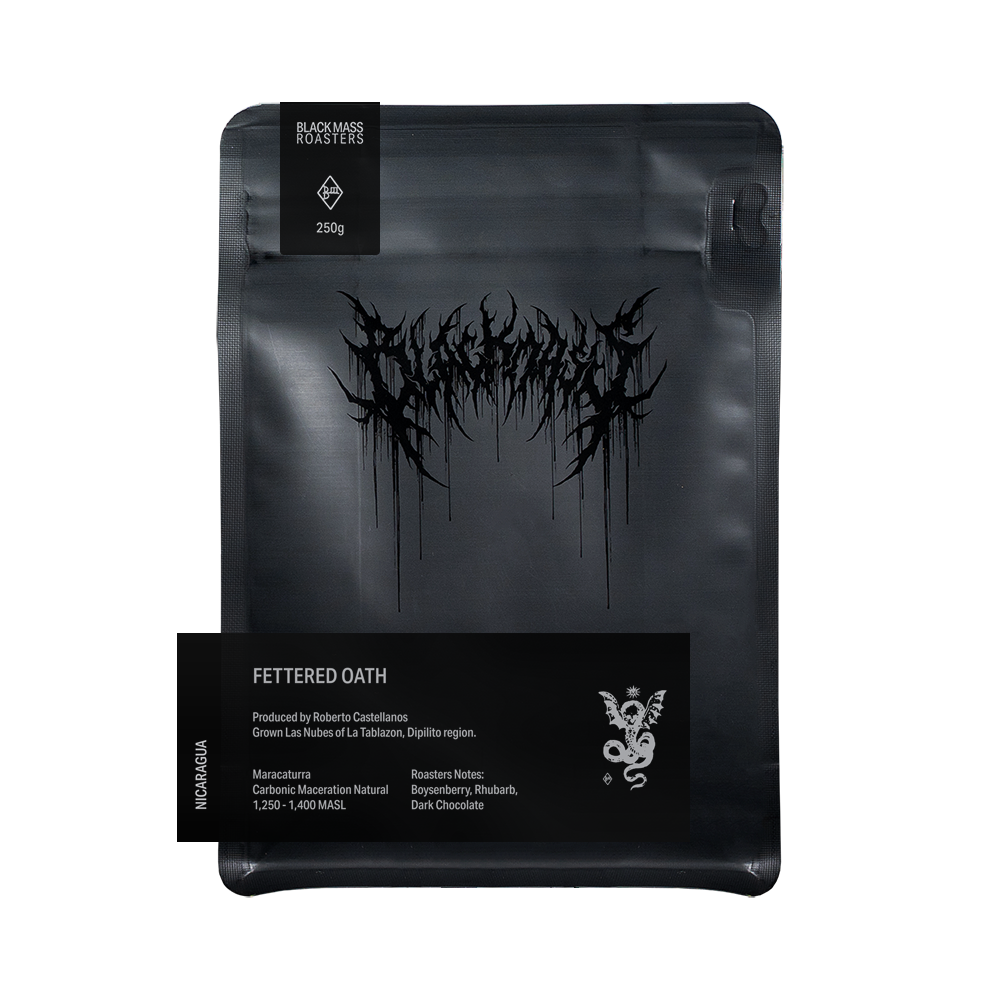
Roasters Notes: Boysenberry, Rhubarb, Dark Chocolate
| Producer: | Roberto Castellanos |
| Farm: | Las Nubes |
| Region: | La Tablazon, Dipilito |
| Varietal: | Maracaturra |
| Processing: | Carbonic Maceration Natural |
| Altitude: | 1,250 - 1,400 MASL |
Around 70 years ago, Antonio Castellanos raised a house of mudbrick for himself and his wife Eusebia, and planted coffee across the five hectares that would become Las Nubes, a name taken from its place within the clouds that drift through the mountains of Dipilto. The world around the farm has shifted across generations. The donkey that once carried their harvest 20 km's to market is no longer needed, yet the memory of those journeys remains part of the land’s quiet history.
Antonio eventually entrusted the farm to his son Reginaldo and his wife, who expanded the property to 22 hectares and earned a second place finish in the 1996 Nicaraguan Cup of Excellence. The original mudbrick house still stands at Las Nubes today. It shelters the family of Sebastian, who have lived and worked with the Castellanos for two decades, tending the soil and shaping each harvest with an unbroken sense of duty.
Roberto Castellanos, the third generation steward of Las Nubes, took leadership in 2019. A coffee agronomist for more than 14 years, he has used his knowledge to push the farm toward a new equilibrium. He plants seedlings directly into the earth rather than relying on plastic bags. He employs bioferments and the fruit trees that surround the farm to create natural inputs, strengthening their self sufficiency. His pursuit is simple yet exacting. He seeks a harmony between elevated quality and minimal environmental impact. Most of Las Nubes is planted with pacas, though smaller plots of caturra, catuai, catimore and maracaturra rise among the bananas, oranges, mandarins and lemons that anchor the canopy.
The lot before you reflects the care woven through this lineage. Cherries were picked ripe and red at 20 - 22 Brix, then hand sorted to remove anything under or over ripe. The fruit was placed into sealed tanks flushed with CO2, where a controlled fermentation at ambient temperature deepened the berry tones and dark fruit weight. After this stage the coffee was dried on raised beds in thin layers beneath full sun for 25 days, allowing the floral structure to lift and settle. Moisture was reduced to ten to twelve percent, and the parchment was stored within dried cherry pods until milling for export, preserving the clarity and integrity shaped on the mountain.
It is our pleasure to present the results of this ongoing craft, a lineage carried through cloud and soil and the steady labour of 3 generations.
Choose options